Online Bus Reservation System Project Source Code: Build, Deploy, and Scale
The online bus reservation system project source code represents a pivotal intersection of transportation logistics and digital innovation. Unlike legacy systems reliant on manual bookings or static schedules, modern solutions leverage real-time data, user authentication, and automated payment gateways to streamline operations. For developers, entrepreneurs, or transit companies seeking to digitize their services, understanding the underlying architecture—from backend logic to frontend UX—is non-negotiable. The shift toward cloud-based deployments and API integrations has further democratized access, allowing even small operators to compete with industry giants by replicating scalable frameworks.
Yet, the journey from concept to deployment isn’t linear. A well-structured online bus reservation system source code must balance functionality with performance, ensuring seamless interactions between passengers, drivers, and administrative modules. The stakes are high: a single latency issue during peak hours can erode trust, while poor security protocols expose sensitive payment data. This gap between ambition and execution is where technical precision becomes critical. Developers must weigh trade-offs between open-source flexibility and proprietary efficiency, while business stakeholders demand features like dynamic pricing, multi-language support, and mobile responsiveness.
What separates a functional prototype from a production-ready system? The answer lies in modular design, database optimization, and adherence to industry standards like GDPR or PCI-DSS. For instance, a reservation engine built on PHP/MySQL may suffice for small-scale deployments, but enterprises often opt for Node.js or Python backends paired with NoSQL databases to handle exponential user growth. The online bus reservation system project source code you choose isn’t just about writing code—it’s about architecting a system that evolves with demand, integrates third-party APIs (e.g., Google Maps for route planning), and minimizes technical debt.
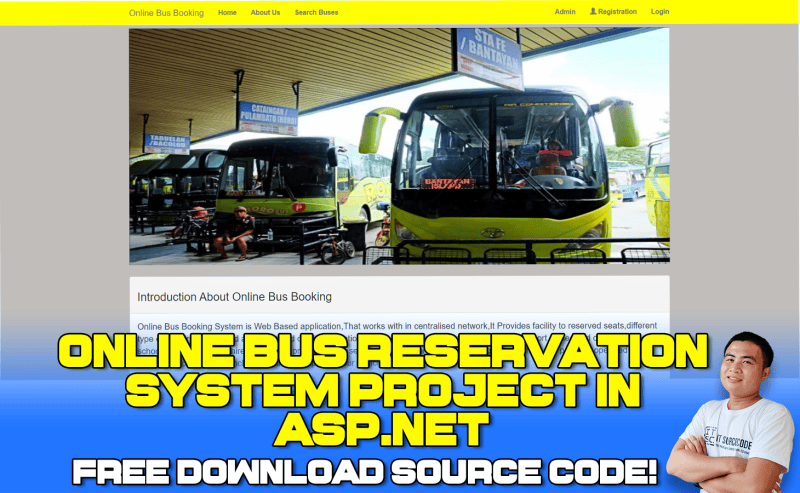
The Complete Overview of Online Bus Reservation System Project Source Code
The online bus reservation system project source code serves as the backbone of digital transit management, encompassing three core layers: frontend interfaces, backend logic, and database operations. Frontend components typically include responsive web/mobile dashboards for passengers (to browse routes, select seats, and complete payments) and admin panels for fleet management, revenue tracking, and customer support. Backend systems handle authentication (OAuth, JWT), transaction processing (Stripe, PayPal), and real-time updates via WebSockets or AJAX. Meanwhile, the database—often a relational schema in MySQL or PostgreSQL—stores user profiles, reservation histories, and bus schedules, with indexing strategies to prevent bottlenecks during high-traffic periods.
Open-source frameworks like Laravel (PHP) or Django (Python) accelerate development by providing pre-built modules for authentication, form validation, and API endpoints. However, custom implementations may be necessary for niche features such as loyalty programs or AI-driven route optimization. The online bus reservation system source code must also account for scalability: horizontal scaling via load balancers or containerization (Docker/Kubernetes) becomes essential as user bases expand. Security, too, is non-negotiable—encryption for payment data, CSRF protection, and regular audits of vulnerable endpoints (e.g., SQL injection risks) are table stakes. Without these safeguards, even the most feature-rich system risks reputational damage.
Historical Background and Evolution
The origins of online bus reservation systems trace back to the late 1990s, when early e-commerce platforms like Amazon popularized digital transactions. Transit companies initially adopted static websites with PDF-based itineraries, but the real turning point came with the rise of SaaS (Software-as-a-Service) models in the 2010s. Open-source projects such as OpenTripPlanner (for route mapping) and custom PHP scripts emerged, allowing developers to repurpose code for bus-specific use cases. The 2015–2020 period saw a surge in mobile-first designs, driven by the need for on-the-go bookings—a demand exacerbated by the COVID-19 pandemic, which forced contactless reservations into the mainstream.
Table of Contents
- The Complete Overview of Online Bus Reservation System Project Source Code
- Historical Background and Evolution
- Core Mechanisms: How It Works
- Key Benefits and Crucial Impact
- Major Advantages
- Comparative Analysis
- Future Trends and Innovations
- Conclusion
- Comprehensive FAQs
- Q: Where can I find reliable online bus reservation system project source code for free?
- Q: What programming languages are best for developing a bus reservation system ?
- Q: How do I ensure my online bus reservation system is secure?
- Q: Can I integrate third-party APIs (e.g., payment gateways, maps) into my bus reservation system ?
- Q: What are the common pitfalls when developing a online bus reservation system ?
- Q: How can I deploy my online bus reservation system for minimal cost?
- Q: Are there any legal considerations for launching a bus reservation system ?
Today, the online bus reservation system project source code reflects a convergence of legacy systems and modern tech stacks. For example, legacy COBOL-based mainframes (still used by some government transit agencies) are being phased out in favor of microservices architectures, where reservation logic is decoupled into independent services (e.g., a separate "payment service" or "notifications service"). Cloud providers like AWS and Azure now offer pre-configured templates for transit applications, reducing deployment time from months to weeks. Yet, the core challenge remains: how to maintain backward compatibility with legacy databases while adopting cutting-edge features like blockchain for ticket fraud prevention or IoT sensors for real-time bus tracking.
Core Mechanisms: How It Works
The workflow of an online bus reservation system begins with user authentication, where passengers log in via email, social media, or phone number (using libraries like Firebase Auth or Passport.js). Once authenticated, the system fetches available routes from the database, applying filters for departure time, seat availability, and price tiers. Behind the scenes, a reservation engine checks inventory in real-time, locking seats to prevent overbooking—a critical feature often implemented via database transactions or distributed locks (e.g., Redis). Payment processing then routes through a secure gateway (e.g., Razorpay for India or Adyen for global markets), with transaction IDs stored for reconciliation.
Post-reservation, the system triggers a cascade of actions: sending confirmation emails/SMS (via Twilio or SendGrid), updating the driver’s dashboard with passenger details, and logging the transaction for analytics. The backend also handles cancellations or refunds, which may involve reversing payments or reallocating seats. For admins, a separate module provides dashboards with KPIs like occupancy rates, revenue per route, and no-show percentages. The online bus reservation system project source code often includes a cron job to clean up expired reservations or generate daily reports. At its core, the system is a symphony of CRUD operations (Create, Read, Update, Delete) orchestrated to minimize latency while maximizing user trust.
Key Benefits and Crucial Impact
The adoption of online bus reservation system project source code has redefined operational efficiency for transit businesses. Manual processes—once reliant on phone calls or in-person counters—now operate at machine speed, reducing errors and labor costs by up to 40%. Passengers benefit from 24/7 accessibility, multi-language support, and dynamic pricing (e.g., discounts for off-peak hours). For developers, the open-source ecosystem lowers entry barriers: repositories on GitHub host reusable modules for everything from seat selection algorithms to GDPR-compliant data anonymization. Even small operators can deploy a bus reservation system with minimal upfront investment, leveraging cloud-based hosting to avoid server maintenance.
Beyond cost savings, these systems enable data-driven decision-making. Analytics modules identify high-demand routes, allowing operators to adjust frequencies or introduce new services. Integration with GPS APIs (e.g., Mapbox) provides real-time tracking, reducing no-shows by sending automated alerts when buses are delayed. The environmental impact is secondary but notable: optimized routes reduce fuel consumption, aligning with global sustainability goals. For governments, digitized transit systems improve accessibility for elderly or disabled passengers, who can now book assistance services alongside their reservations.
"The most successful online bus reservation systems aren’t just about selling tickets—they’re about creating an ecosystem where every interaction, from booking to feedback, adds value. The difference between a good system and a great one is in the details: how quickly it recovers from failures, how intuitive it is for first-time users, and how seamlessly it integrates with existing workflows."
—Rajesh Kumar, CTO of TransitTech Solutions
Major Advantages
- Automation of Repetitive Tasks: Eliminates manual data entry for reservations, cancellations, and refunds, reducing human error by 90%. Automated email/SMS confirmations improve customer satisfaction scores.
- Real-Time Inventory Management: Prevents overbooking via database locks or queue systems (e.g., RabbitMQ), ensuring seat availability is always accurate.
- Multi-Channel Accessibility: Supports web, mobile (React Native/Flutter), and even voice assistants (e.g., Alexa skills for route inquiries), catering to diverse user preferences.
- Scalable Architecture: Microservices and serverless functions (AWS Lambda) allow the system to handle 10x growth without proportional cost increases.
- Actionable Insights: Built-in analytics dashboards (e.g., Power BI integrations) help operators identify trends like peak travel times or underperforming routes.
Comparative Analysis
| Feature | Open-Source (e.g., Laravel + MySQL) | Proprietary (e.g., Amadeus, Sabre) |
|---|---|---|
| Customization | High (full access to source code) | Limited (vendor-imposed constraints) |
| Cost | Low (open-source licenses, self-hosted) | High (subscription fees, per-transaction costs) |
| Integration Capabilities | Flexible (APIs for third-party tools) | Restricted (vendor lock-in) |
| Scalability | Depends on infrastructure (cloud vs. on-premise) | Optimized for enterprise (global support) |
Future Trends and Innovations
The next frontier for online bus reservation system project source code lies in AI and predictive analytics. Machine learning models can now forecast demand with 92% accuracy, enabling dynamic pricing adjustments in real-time. For example, a system might automatically reduce fares for a route if occupancy drops below 30%. Blockchain is also gaining traction for secure, tamper-proof ticketing, where each reservation is recorded on a distributed ledger to prevent fraud. Meanwhile, the rise of electric buses necessitates integration with charging station APIs, allowing passengers to book routes based on vehicle type and sustainability metrics.
On the user experience front, voice-enabled reservations and augmented reality (AR) previews of bus interiors are poised to redefine engagement. For developers, low-code platforms like Bubble or OutSystems may reduce the need for custom bus reservation system source code, though these often lack the granular control required for complex logistics. The biggest challenge ahead? Balancing innovation with interoperability—ensuring that new features (e.g., carbon footprint calculators) don’t fragment the ecosystem. The systems that thrive will be those built on modular, future-proof architectures, where components like payment gateways or mapping services can be swapped without disrupting core functionality.

Conclusion
The online bus reservation system project source code is more than a technical project—it’s a catalyst for transforming an entire industry. For developers, it’s an opportunity to solve real-world problems with scalable, maintainable code; for businesses, it’s a tool to outpace competitors by leveraging data and automation; and for passengers, it’s the gateway to seamless, stress-free travel. The key to success lies in understanding the balance between off-the-shelf solutions and custom development. While open-source frameworks provide a solid foundation, the most impactful systems are those tailored to specific needs—whether that means integrating with local payment gateways or optimizing for rural connectivity.
As technology advances, the line between a reservation system and a full-service mobility platform will blur. Imagine a future where your bus reservation system also suggests nearby attractions, offers subscription bundles, or partners with ride-sharing apps for last-mile connectivity. The online bus reservation system project source code you build today should be designed with this vision in mind: flexible enough to adapt, robust enough to scale, and user-centric enough to drive loyalty. The transit industry’s digital revolution has only just begun.
Comprehensive FAQs
Q: Where can I find reliable online bus reservation system project source code for free?
A: Reputable open-source repositories like GitHub host several projects under the MIT or GPL licenses. Search for keywords like "PHP bus booking system" or "Node.js transit API" and filter by stars (indicating popularity) and recent updates. Popular options include:
Q: What programming languages are best for developing a bus reservation system?
A: The choice depends on your team’s expertise and project scale:
Q: How do I ensure my online bus reservation system is secure?
A: Security should be baked into every layer:
1. Data Layer: Use prepared statements (PDO) to prevent SQL injection, and encrypt sensitive data (AES-256 for databases).
2. Application Layer: Implement CSRF tokens, rate limiting, and input validation (e.g., sanitize user inputs with libraries like Validator.js).
3. Network Layer: Enforce HTTPS (TLS 1.2+), use Web Application Firewalls (WAFs), and restrict database access via IP whitelisting.
4. Compliance: Adhere to PCI-DSS for payments and GDPR for user data, especially if operating in the EU.
Q: Can I integrate third-party APIs (e.g., payment gateways, maps) into my bus reservation system?
A: Yes, most modern systems support API integrations. For payments, use SDKs like Stripe’s or PayPal’s official libraries. For maps, Google Maps API or OpenStreetMap provide route planning and real-time tracking. To implement:
1. Register for API keys in the provider’s developer portal.
2. Use HTTP clients (e.g., Guzzle in PHP, Axios in JavaScript) to call endpoints.
3. Handle rate limits and error responses (e.g., retry failed requests with exponential backoff).
Example: A route search might call Google Maps’ Directions API to fetch ETA and distance.
Q: What are the common pitfalls when developing a online bus reservation system?
A: Avoid these mistakes:
Q: How can I deploy my online bus reservation system for minimal cost?
A: For budget-conscious deployments:
1. Hosting: Use cloud providers with free tiers (e.g., AWS Free Tier, Google Cloud’s $300 credit) or shared hosting (e.g., Hostinger for PHP apps).
2. Database: PostgreSQL on Heroku (free tier) or MySQL on DigitalOcean droplets (~$5/month).
3. CI/CD: Automate deployments with GitHub Actions or GitLab CI to push updates without manual intervention.
4. Monitoring: Start with free tools like Sentry (error tracking) or UptimeRobot (uptime alerts).
For production, consider serverless options (AWS Lambda + DynamoDB) to reduce operational overhead.
Q: Are there any legal considerations for launching a bus reservation system?
A: Yes, depending on your region:
Leave a Comment
Comments are moderated before appearing. The data you submit is processed according to the Privacy Policy of maps.impresamodular.com.